
Ideas you can bring to class tomorrow
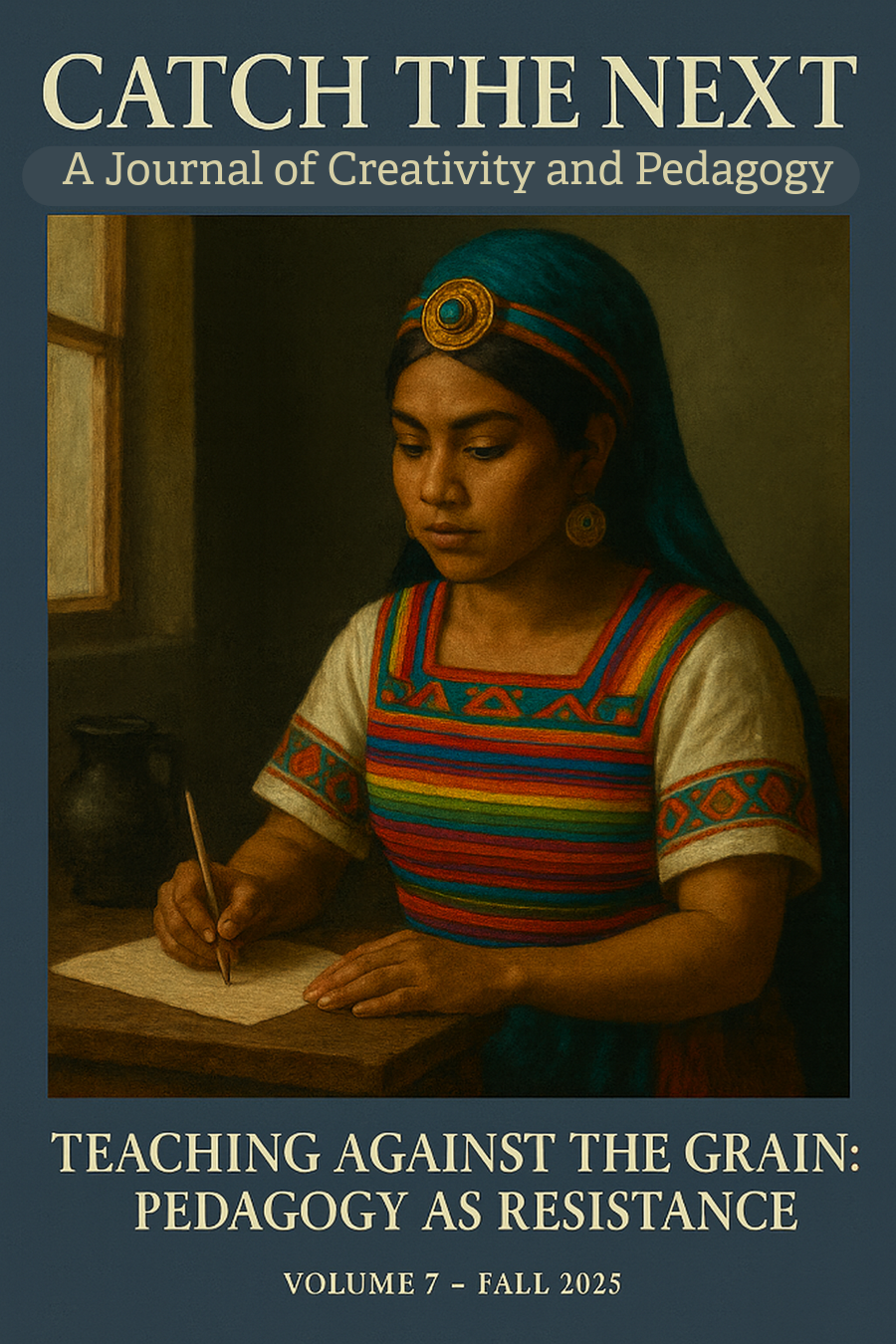
Teaching Against the Grain — Pedagogy as Resistance
This volume gathers scholarship, classroom practice, and the arts—built to inspire, challenge, and sustain educators. You’ll find pedagogy pieces, poetry, fiction, and a book review curated from CTN’s community of fellows, faculty, and writers.
Published by Catch The Next, Inc.
Inside Volume 7
Pedagogy & Essays (highlights):
“Making Space for Emotional Processing in Early Writers” — Mary Shaver (University of South Florida): techniques and activities for safer, purposeful student writing.
“Examining the Past to Preserve the Future” — Alfredo Torres, Jr. & Rafael C. Castillo: a humanities-focused exploration connecting classical texts to character, ethics, and civic life.
“Ancient Greek culture was not born out of isolation” — Rafael C. Castillo: teaching-ready context on Greek-Egyptian exchange (Herodotus, Plato, Alexandria).
Journal of Creativity and Pedagogy
Vol.7
Poetry
Selections featuring Las Voces Cósmicas, affirming resilient artistic voices across San Antonio and beyond.
Fiction
Two short stories—“Old Stone Head” by Arthur Gonzalez Carvajal, Jr., and “Susto” by Julian S. Garcia—reflecting a range of contemporary narrative craft.
Book Review
A review by Rafael C. Castillo closes the issue.
Format & Access
Digital PDF Instant download after purchase (Volume produced with handheld access in mind; print/hard-copy production supported via Tiltwood Press partnership.)
Get Volume 7 today - Digital edition — $10